There’s a particular kind of tired that only night shift workers understand.
It’s not the tired you feel at the end of a long day. It’s deeper. It lives in your bones. Your body says sleep. The sun says wake up. Your alarm says get ready. And your circadian rhythm sits in the corner, confused and angry, wondering what you’ve done to it.
Working a 12-hour night shift is a fight against biology. Your internal clock is wired to sleep during dark hours and stay awake during daylight. Every shift you work asks your body to do the opposite. And your body doesn’t forget the insult.

But here’s the truth most people never hear: night shift work doesn’t have to destroy your sleep. Thousands of night shift workers around the globe have cracked the code. They’ve built sleep schedules that work alongside their shifts instead of against them. They’re getting 7-9 hours of restful sleep. They’re sharp at 3 AM. They’re present for their families during the day.
The difference between a night shift worker who’s barely surviving and one who’s genuinely thriving? A thought-out schedule. Not vague intentions to “sleep more.” A real, structured, repeatable 12-hour night shift sleep schedule example they follow consistently.
Let me lay one out for you.
The Core Problem: Your Circadian Rhythm Is Fighting You
Your circadian rhythm is a 24-hour cycle controlled by your internal clock, a cluster of neurons in your brain that responds primarily to light. Daylight tells your clock it’s time to be alert. Darkness triggers melatonin, the sleep hormone, telling your body to wind down.
Night shift workers flip the entire system. You’re asking your body to stay alert during the hours it’s programmed to sleep and to fall asleep during the hours it’s programmed to be awake. Your circadian rhythms resist the change. Hard.

- Top Rated: Highly recommended by users.
- Premium Quality: Built with safe materials.
- Best Value: Exceptional feature set for the price.
The result? Shift work sleep disorder. A recognized sleep disorder affecting roughly 10 to 40 percent of shift workers. Symptoms include sleep difficulties falling or staying asleep during daytime hours, excessive fatigue during night work, irritability, poor concentration, and long-term health risks.
Even shift workers who don’t meet the clinical criteria for shift work sleep disorder still experience interrupted sleep patterns, shallow sleep, and sleep quality that’s measurably worse than their daytime counterparts.
You’re not imagining it. Sleeping during the day is genuinely harder. Your body produces less melatonin during daylight. Environmental noise is higher. Temperature is warmer. Light creeps through every crack. Your sleep-wake cycle is under constant assault.
But it’s not hopeless. Not even close.
The 12-Hour Night Shift Sleep Schedule Example: A Complete Day Mapped Out
Let me give you a concrete, hour-by-hour schedule example for a night shift worker doing 7 PM to 7 AM shifts. Adjust the timing forward or backward depending on your specific shift start and end.
Sample Schedule: Night Shift 7:00 PM to 7:00 AM
Pre-Shift (Daytime)
| Time | Activity |
|---|---|
| 8:00 AM | Arrive home from shift. Quick meal. Wind down. |
| 8:30 AM | Pre-sleep routine begins. Shower, dim lighting, no screens. |
| 9:00 AM | In bed. Blackout curtains closed. Sleep mask on. White noise running. Phone silenced. |
| 9:00 AM to 4:00 PM | Primary sleep session (7 hours of pure sleep opportunity) |
| 4:00 PM | Wake up naturally or by alarm. Light exposure immediately. |
| 4:15 PM | Hydrate. High-protein meal. Movement (walk, stretch, light exercise). |
| 5:00 PM to 6:00 PM | Personal time. Errands. Family. Evening activities. |
| 6:00 PM | Pre-shift preparation. Meal, pack food for shift, get dressed. |
| 6:15 PM | Pre-shift relaxation. No stressful tasks. Calm transition. |
| 6:30 PM | Leave for work (adjust for long commutes and travel time). |
| 7:00 PM | Shift begins. |
During Shift
| Time | Activity |
|---|---|
| 7:00 PM to 7:00 AM | 12-hour night shift |
| 12:00 AM to 12:30 AM (approx.) | Meal break. Protein-heavy food. Limit sugar and caffeine past midnight. |
| 3:00 AM to 4:00 AM | Fatigue valley. The hardest stretch. Strategic movement, cold water on face, bright light exposure if available. No caffeine past 3 AM. |
Post-Shift
| Time | Activity |
|---|---|
| 7:00 AM | Shift ends. Sunglasses on immediately (block daylight to protect melatonin production). |
| 7:00 AM to 8:00 AM | Commute home. No errands. Straight home. |
| 8:00 AM to 9:00 AM | Wind down. Light meal. Pre-sleep routine. |
| 9:00 AM | Sleep. |
That’s the rhythm. Sleep from roughly 9 AM to 4 PM. Live from 4 PM to 6:30 PM. Work from 7 PM to 7 AM. Repeat.
It’s not glamorous. It’s effective.
Why The Schedule Works: The Science Behind Each Choice

Sleep Timing: 9 AM to 4 PM
Most night shift workers face a choice: sleep immediately after the shift or stay awake for a few hours first.
Sleeping immediately wins almost every time.
Here’s why. Your body has been awake for 14 to 16 consecutive hours by the time you get home from a 12-hour night shift. Sleep pressure is at its peak. If you push through and stay awake until noon or later, you lose that pressure. Your body gets a second wind. Falling asleep becomes harder, and the sleep you do get is lighter and more fragmented.
The sleep from 8 AM to 4 PM window catches the tail end of your melatonin production (it doesn’t shut off instantly at sunrise) and leverages your maximum fatigue. Deep sleep is more accessible in the earlier hours of a daytime sleep session. The later you push it, the more your body fights you.
Day sleepers who sleep from 8 AM to 4 PM consistently report better sleep quality than those who delay and sleep from noon to 8 PM.
The 3-4 Hour Fatigue Valley
Every night shift worker knows the 3 AM to 5 AM window. It’s the trough of the circadian rhythm. Your body temperature drops. Alertness plummets. Fatigue peaks. Mistakes spike.
You’re not weak for struggling here. Every human body experiences a circadian low point during these early hours. Night owls handle it slightly better than morning types, but nobody is immune.
Practical strategies for the fatigue valley:
- Brief movement breaks (walk, stretch, stairs)
- Cold water on your wrists and face
- Bright overhead light exposure (the brighter the better)
- A very short nap of 15 to 20 minutes if your workplace allows it (set an alarm, don’t let sleep inertia take you into deep sleep)
- No caffeine. Seriously. Caffeine consumed past 3 AM disrupts your daytime sleep session several hours later.
The Pre-Sleep Routine
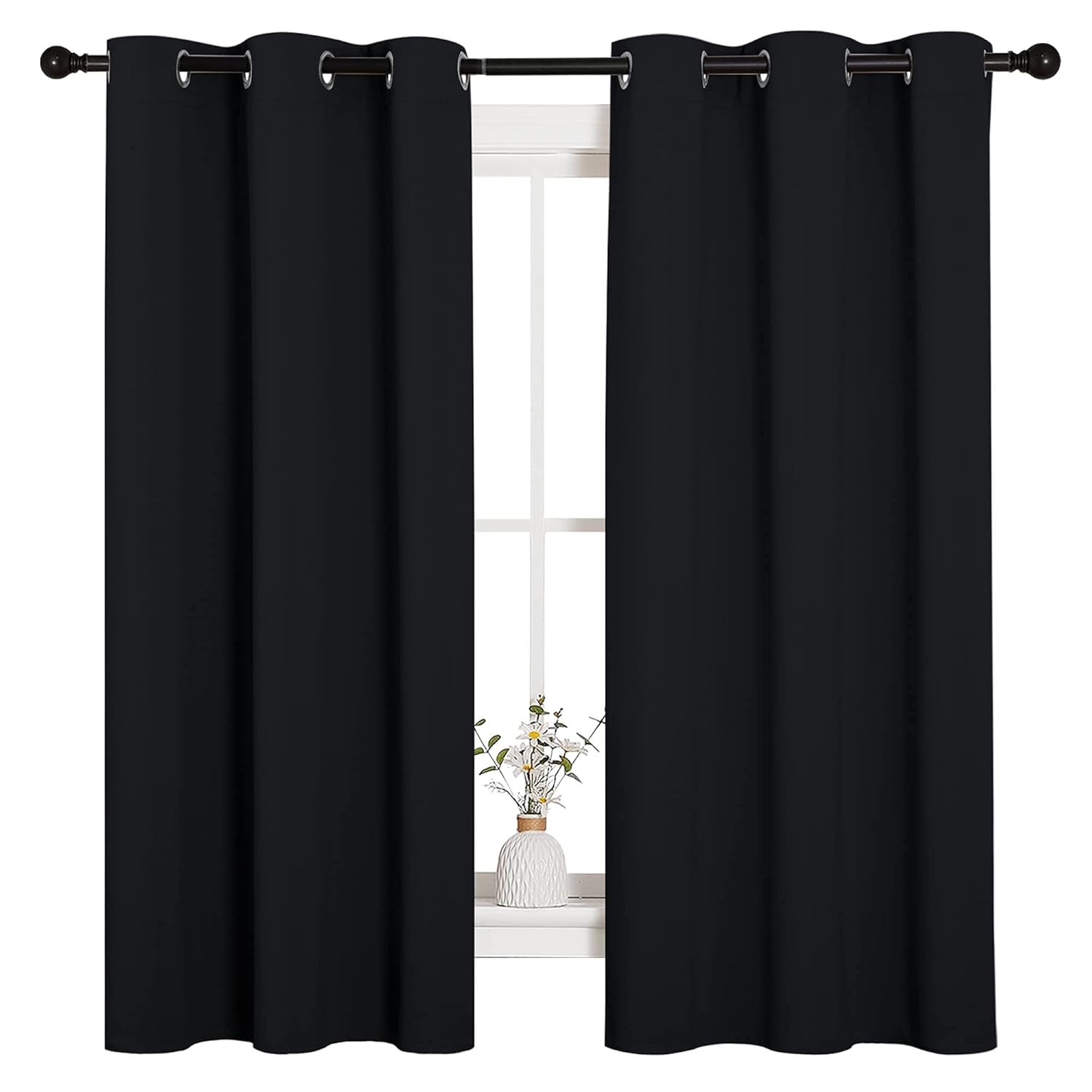
- ENERGY SMART: Triple weave blackout fabric balances room temperature by insulating against summer heat and winter chill. Protect your furniture, floors, and artwork from the ravages of the sun, the drapes will pay for themselves off over time.
- SERVE WELL: Curtains impede 85%-99% light and UV rays(Dark color curtains work well). Noise-reducing, better TV viewing thanks to the innovative triple weave technology.
- EASY TO MAINTAIN: NICETOWN blackout curtains are made to last. Machine washable in cold water, tumble dry. Quick ironing or steam clean when needed. Visiting the NICETOWN store, find out your favorite curtains.
- READY MADE: Package only includes 2 blackout curtain panels, each 42' wide x 63' long when fully spread, with 6 grommets. Due to handmade craftsmanship, size may vary by 1'. No curtain rod included. The fabric is soft and heavy without a liner.
A pre-sleep routine for a night shift worker is just as powerful as a bedtime routine for a baby. (And yes, I recognize the irony of that comparison.)
Your body needs a signal that sleep approaches. Working a high-stimulus 12-hour shift and then immediately trying to fall asleep is like sprinting a mile and then trying to meditate. Your nervous system needs a bridge.
A simple pre-sleep routine for shift workers:
- Sunglasses on during the commute home (even on cloudy days, daylight signals your internal clock to wake up)
- Minimal screen time at home
- Warm shower or bath (the post-bath temperature drop promotes drowsiness)
- Light, easy-to-digest meal (nothing heavy or spicy)
- Room prep: blackout curtains closed, white noise on, phone silenced, cool temperature
- Sleep mask on
- In bed within 60 minutes of arriving home
The routine doesn’t need to take long. 30 to 45 minutes is plenty. The consistency matters more than the duration.
The Optimal Sleep Environment For Day Sleepers
Your sleeping environment is either your greatest ally or your worst enemy. For night shift workers sleeping during daytime hours, the environment requires deliberate engineering.
Darkness Is Non-Negotiable
Your brain responds to light at the wavelength level. Even small amounts of light leaking through curtains or around door frames suppress melatonin and fragment sleep cycles.
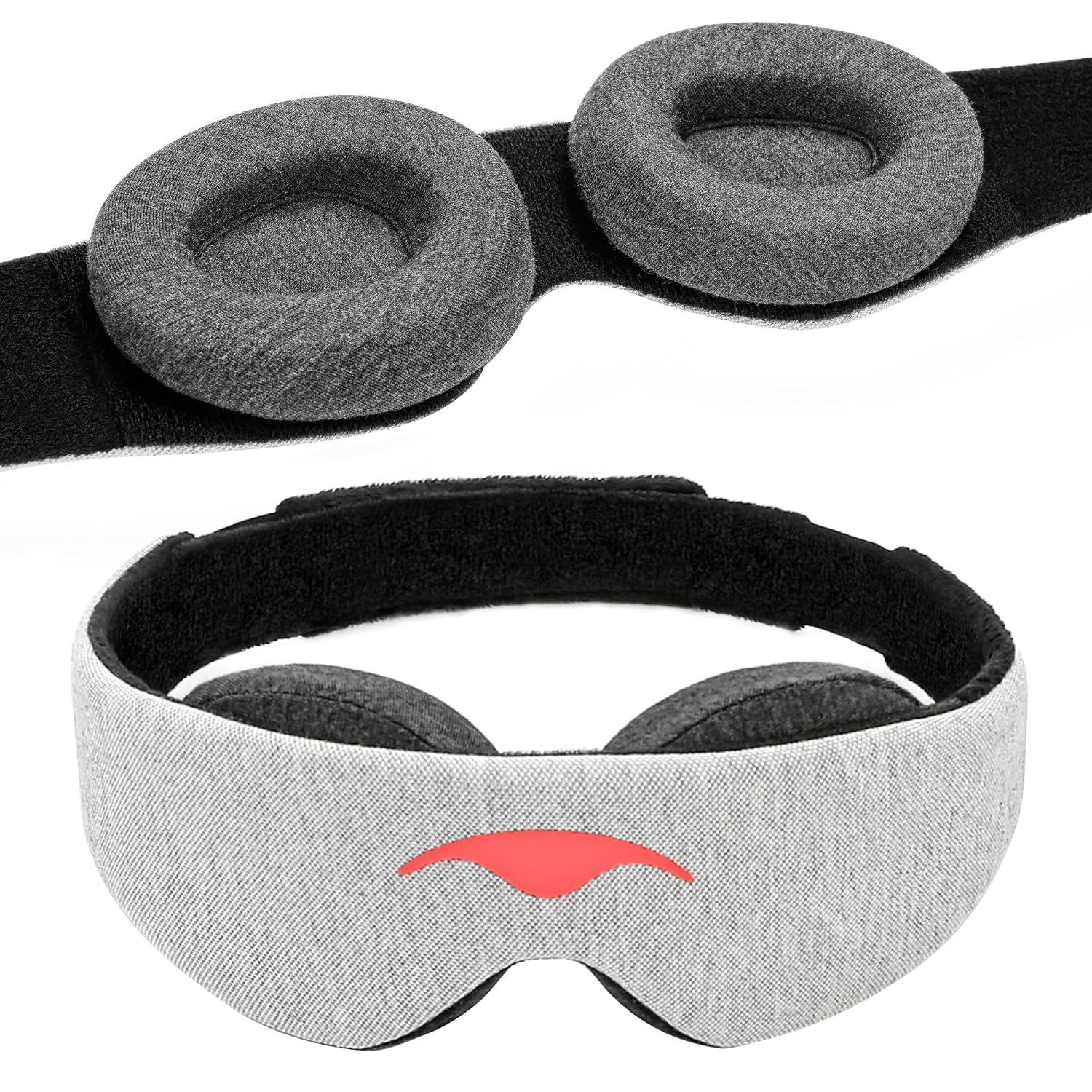
- Soft, Breathable, Durable Materials — Manta is designed for no-compromises comfort and is constructed with super soft, breathable, durable materials that gently conform to your face without putting any pressure on your eyes.
- Zero Pressure on Eyes or Lashes — Deeply molded eye cups for complete comfort in every position. So you snooze soundly whether you're on your back, side, or stomach.
Blackout solutions:
- Heavy blackout curtains (floor to ceiling, overlapping the window frame)
- Blackout blinds behind the curtains for double coverage
- A high-quality sleep mask for any remaining light leakage
- Aluminum foil on windows (it looks terrible and works beautifully)
- Tape or velcro strips to seal curtain edges against the wall
A sleeping environment that’s truly dark, not just dim, adds measurably to your sleep quality and your ability to reach and sustain deep sleep.
Temperature
Your body temperature drops during sleep. A cool sleep environment of 65 to 68 degrees supports restorative sleep. Daytime temperatures run higher than nighttime temperatures, making a cool room harder to achieve.
Options: blackout curtains (they block heat too), a fan, air conditioning, or cooling mattress pads.
Sound
Daytime is louder than nighttime. Traffic, construction, neighbors, delivery trucks, dogs, children, lawn mowers. The world doesn’t stop operating during your sleep times.
White noise is essential. A dedicated white noise machine or a fan running continuously masks environmental disruptions. Not music. Not a podcast. Steady, monotonous noise that runs for your entire sleep session.
Earplugs are a solid backup, especially for sleepers in particularly noisy environments.
The Phone
Silence it. Not vibrate. Silence. Every notification, text, and call that buzzes during your sleep session is a potential awakening. Let people know your sleep times. Set an emergency bypass for critical contacts.
Scheduling time for calls and messages during your awake window protects your sleep from constant interruption.
The Nap-Focused Schedule: An Alternative Approach
Not every night shift worker sleeps best in a single 7-hour block. Unusual sleep patterns are common among shift workers, and a split-sleep approach works well for many.
The Split Sleep Schedule Example
| Time | Activity |
|---|---|
| 7:00 AM | Shift ends. Commute home. |
| 8:30 AM | First sleep session begins. |
| 8:30 AM to 1:00 PM | Sleep session 1 (4-6 hours) |
| 1:00 PM to 5:00 PM | Awake time. Meals, exercise, errands, family, evening activities. |
| 5:00 PM to 6:30 PM | Evening nap / second sleep session (60 to 90 minutes) |
| 6:30 PM | Wake. Pre-shift preparation. Meal. |
| 7:00 PM | Shift begins. |
The nap-focused schedule gives you a longer awake window during the afternoon and evening at the cost of a shorter primary sleep block. The evening nap tops off your sleep bank right before the shift.
The key: The evening nap must be timed carefully. Too close to shift start and sleep inertia leaves you groggy for the first hour of night work. Too far from shift start and the benefit fades. Ending the nap 30 to 60 minutes before departure strikes the right balance.
Late Sleeper Schedule
Night owls and natural late sleepers sometimes find a different schedule works better for their personal sleep patterns:
| Time | Activity |
|---|---|
| 7:00 AM | Shift ends. |
| 7:00 AM to 10:00 AM | Awake. Errands, gym, meals, sunlight exposure. |
| 10:00 AM to 5:00 PM | Sleep session (7 hours) |
| 5:00 PM to 7:00 PM | Awake. Pre-shift preparation. Meal. |
| 7:00 PM | Shift begins. |
The late sleeper schedule delays sleep by a few hours after the shift, allowing the night owl’s natural circadian rhythms to align more closely to the daytime sleep window. Sleep quality for natural night owls is frequently higher during a late morning to afternoon window than an early morning one.
The First Night Problem: Transitioning Onto Night Shifts
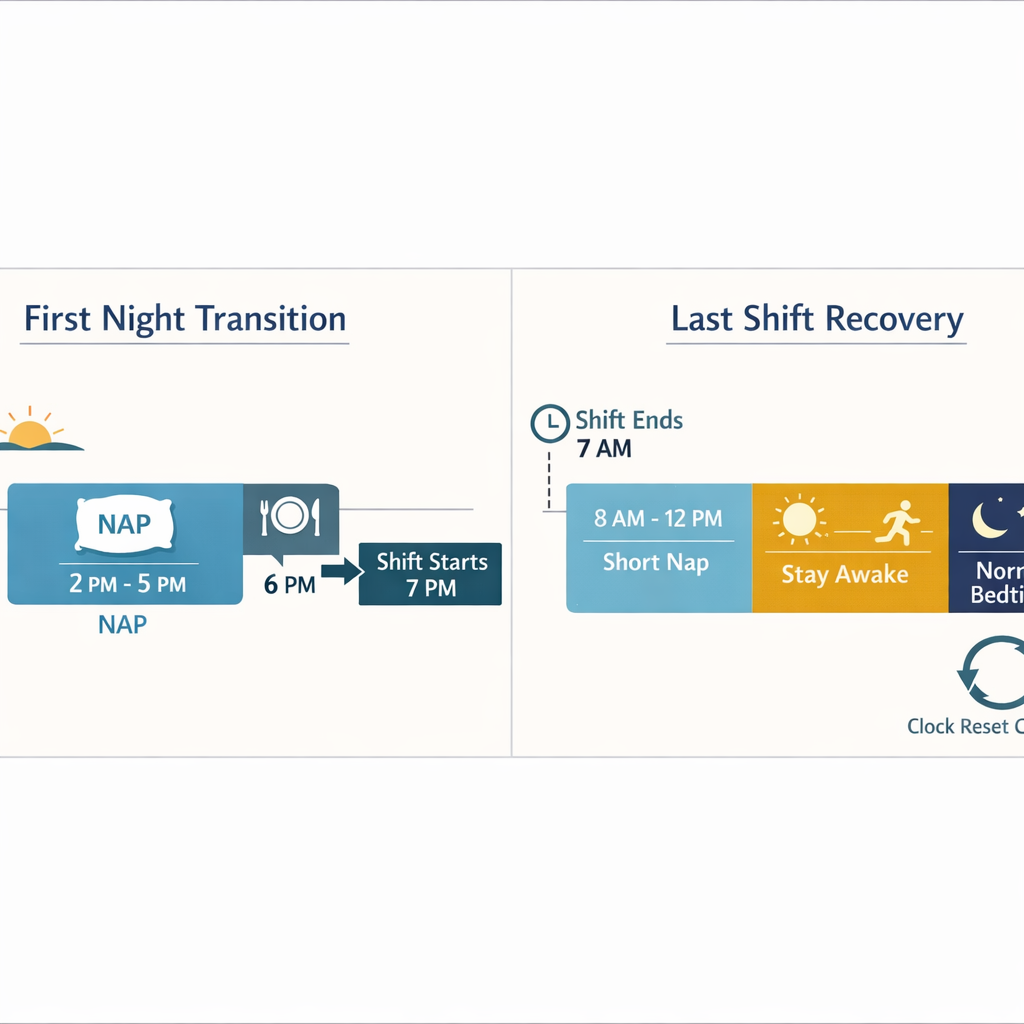
Your first night of a night shift clump is always the hardest. You slept the previous night on a regular schedule. Now you need to stay awake for 24 or more consecutive hours.
On first night, I would take a 3-4 hour afternoon nap. Here’s why:
Sleeping from roughly 2 PM to 5 or 6 PM gives you a strategic energy reserve. You wake refreshed enough to power through your first night without the dangerous fatigue that hits at 4 AM.
First Night Transition Schedule Example
| Time | Activity |
|---|---|
| Morning | Wake at your regular time. Normal daytime schedule. |
| 12:00 PM to 1:00 PM | Lunch. Begin winding down. |
| 2:00 PM | Afternoon nap begins. Blackout curtains. Sleep mask. Alarm set for 5:00 or 6:00 PM. |
| 5:00 PM to 6:00 PM | Wake from nap. Light exposure. Energizing meal. |
| 6:30 PM | Leave for work. |
| 7:00 PM | First night begins. |
That 3-4 hour nap is the difference between a first night that’s manageable and one that’s dangerous. Many employee sleeps patterns fall apart on the first night simply due to a lack of pre-shift napping.
The Last Shift Recovery: Transitioning Back To A Daytime Schedule
The final shift of a night shift clump brings its own challenge: flipping back to a normal sleep pattern.
Last Shift Recovery Schedule Example
| Time | Activity |
|---|---|
| 7:00 AM | Last shift ends. |
| 8:00 AM to 12:00 PM | Short nap (3-4 hours). Not a full sleep. Just enough to take the edge off. |
| 12:00 PM (Noon) | Wake up. Force yourself up. This is the hardest part. |
| 12:00 PM to 10:00 PM | Stay awake. Eat meals at normal daytime work hours. Get daylight exposure. Exercise if you’re able. |
| 10:00 PM | Bedtime. Full night of sleep on a regular sleeping pattern. |
| 6:00 AM to 7:00 AM | Wake up on a normal daytime schedule. |
The short nap after the last shift prevents total collapse. Limiting it to 3-4 hours prevents your body from locking into the daytime sleep pattern. Staying awake through the afternoon builds enough sleep pressure for a full night of restorative sleep at your normal bedtime.
It’s one uncomfortable afternoon. It resets your clock.
Night Shift Clump Strategies: 3 Nights, 4 Nights, 2-2-3 Rotation
Different shift workers face different rotation patterns. Here’s how to adapt:
3 Consecutive Night Shifts
The most common night shift clump for 12-hour coverage schedules.
Strategy: Maintain the same sleep schedule for all three nights. Sleep from 9 AM to 4 PM (or your chosen window) every day. Don’t shift your sleep times between shifts. Consistency locks your body into a temporary rhythm.
On the first night, take that afternoon nap. On the last shift, use the recovery protocol above.
4 Consecutive Night Shifts
Longer stretches of long night shifts demand extra attention to sleep hygiene.
Strategy: Same as above, but fatigue compounds over four nights. By the third and fourth night, your sleep debt is building. A short nap before shifts 3 and 4 (30 to 45 minutes around 5 to 6 PM) provides a targeted sleep window that buffers against cumulative fatigue.
2-2-3 Shift Rotation
The 2-2-3 shift rotation (2 days on, 2 off, 3 on, then reversing the following week) is one of the most disruptive schedules in existence. Such schedules force constant flipping between day and night orientation.
Strategy: On blocks of 2 or 3 night shifts, try to keep the same sleep schedule throughout the block. On days off, let your body recover naturally. Don’t try to maintain the night shift schedule on off days (your social life and mental health need daytime hours).
The transition days will be rough. Accept the one uncomfortable day on each end. Minimize evening distractions on transition nights and prioritize an early bedtime.
Staggering Shift Thing: Rotating Between Days And Nights
A staggering shift thing happens to workers who rotate between day shifts and night shifts within the same week or pay period. Your body never fully adjusts to either schedule.
Practical sleep strategies for rotating shift workers:
- On night shift blocks: follow the 12-hour night shift sleep schedule example above
- On day shift blocks: sleep on a normal nighttime sleep pattern
- On transition days: use the first night nap protocol and last shift recovery protocol
- Always maintain the same pre-sleep routine regardless of shift type (your body learns the routine as a sleep cue, independent of the clock)
- Bright light exposure during the first few hours of every shift helps your internal clock adjust faster to the current schedule
It’s not ideal. But thought-out shift patterns and consistent routines minimize the damage of constant rotation.
The Caffeine Rule Every Night Shift Worker Needs

Caffeine is a tool. A powerful one. And like every powerful tool, it causes harm in careless hands.
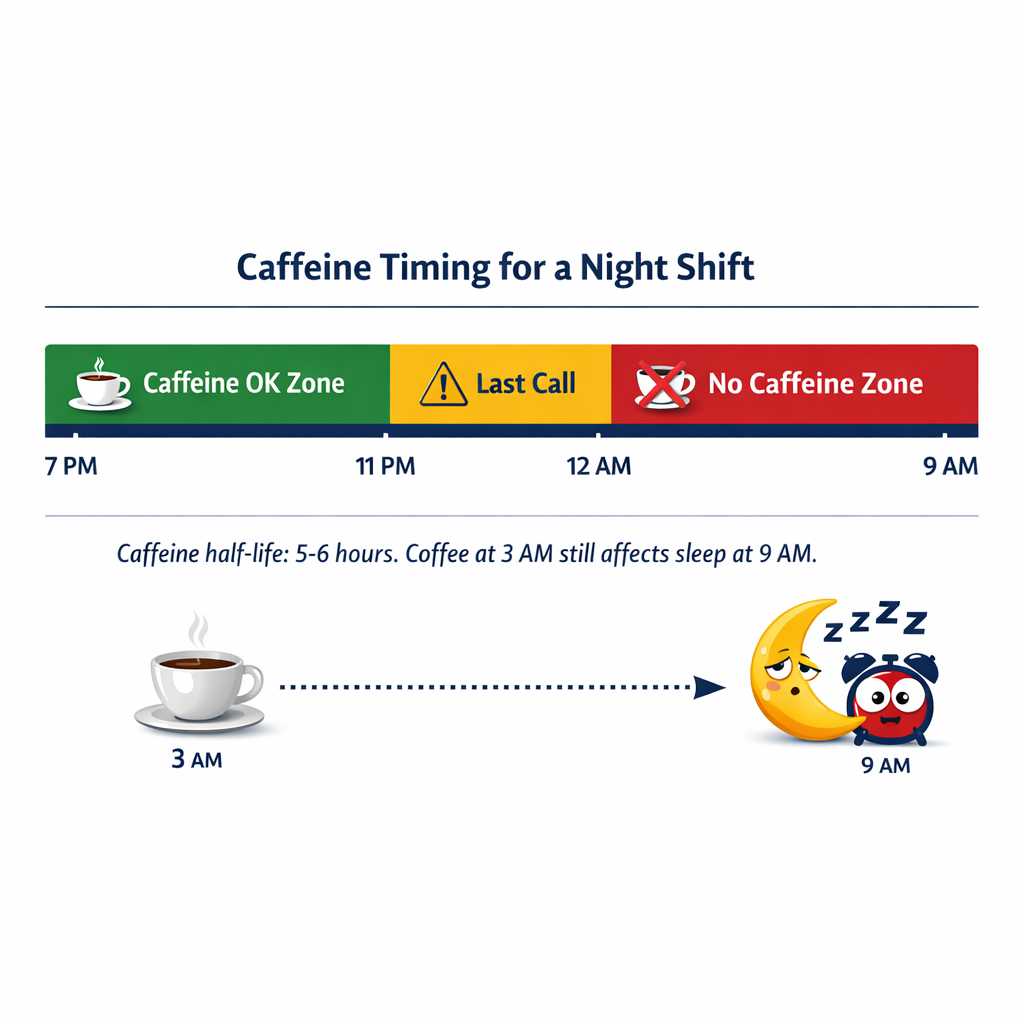
The rule: No caffeine during the second half of your shift.
For a 7 PM to 7 AM shift, that means no coffee, tea, or energy drinks past midnight. Ideally, stop at 11 PM.
Caffeine has a half-life of 5 to 6 hours. A cup of coffee at 3 AM still has half its stimulant effect at 8 or 9 AM, right during your targeted sleep window. That cup of coffee at 3 AM doesn’t just keep you alert for a few hours. It sabotages 1-2 hours of sleep quality on the back end.
Front-load your caffeine to the first half of the shift. One strong coffee at the start. Another at the midpoint if needed. Nothing after midnight. Your daytime sleep depends on it.
Nutrition And Night Shift Sleep
What you eat during your shift directly impacts how well you sleep afterward.
Eating for better daytime sleep:
- Heavy, fatty meals during the shift cause sluggishness during work and digestive discomfort during sleep
- High-sugar foods create energy spikes followed by crashes, disrupting alertness during work and sleep patterns afterward
- Protein-rich meals and snacks sustain energy more evenly across long hours
- A light meal at noon (during your sleep break) and a moderate meal before the shift at 6 PM creates a balanced pattern
- The pre-sleep meal after the shift is light and easy to digest (yogurt, toast, banana, a small bowl of cereal)
Eating your largest meal before the shift and your lightest meal before bed mirrors normal circadian eating patterns and supports a healthy sleep schedule.
Exercise And Night Shift Sleep
Exercise improves sleep quality for everyone. For night shift workers, the timing matters enormously.
Best exercise timing for 12-hour night shift workers:
- Between 4 PM and 6 PM (during your awake window before the shift)
- NOT immediately after the shift (exercise raises cortisol and body temperature, both of which delay sleep)
- NOT during your sleep session (obviously, but worth stating)
Even 20 to 30 minutes of moderate exercise during your pre-shift awake window improves deep sleep quality during your next sleep session. Walking, jogging, bodyweight exercises, or a quick gym session all produce measurable benefits.
Mental Health, Social Life, And The Night Shift Grind
Let me say something the sleep science articles rarely address.
Night shift work is isolating. Your sleep times overlap your family’s awake time. Your awake time overlaps their sleep. You miss evenings, weekends, birthdays, dinners. You feel like a ghost in your own home. The night shift grind isn’t just physical. It’s emotional.
Sleep problems compound the isolation. Poor sleep leads to irritability, low mood, and difficulty engaging during the short time you do have with the people you love.
A consistent sleep schedule protects your mental health too. Not just your physical recovery. Predictable sleep times give your family a framework for understanding your availability. “Dad sleeps from 9 to 4” is something a household adapts around. Random, chaotic sleep sessions leave everyone confused and frustrated.
Protect your awake time fiercely. The hours between 4 PM and 6:30 PM (in the sample schedule above) are your hours. For family. For yourself. For the evening activities that keep you connected to the world that operates during daylight.
Night nurse, warehouse worker, security officer, factory operator, EMT, whoever you are: your life outside work matters. A good sleeping schedule protects it.
Common Night Shift Sleep Schedules Compared
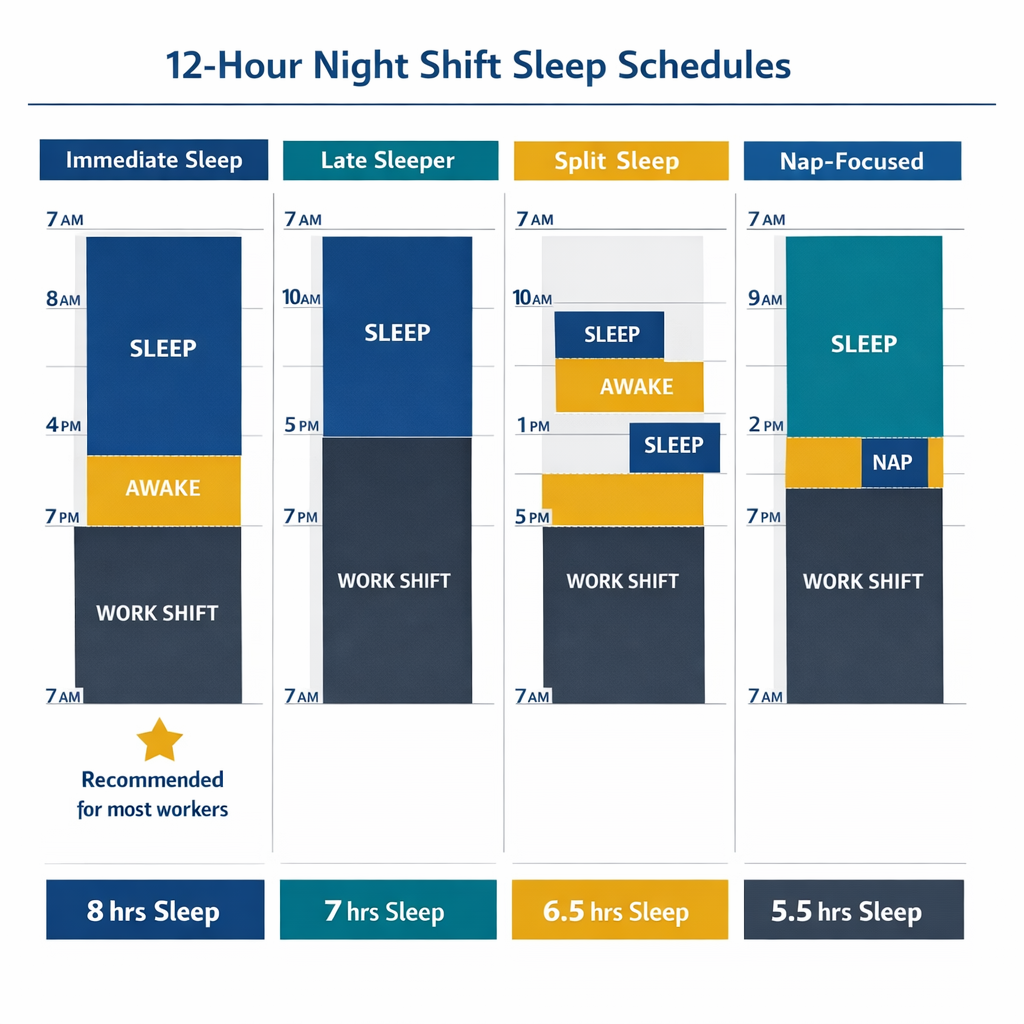
Here’s a quick comparison of the most popular 12-hour shift schedule approaches:
| Schedule Type | Sleep Window | Total Sleep | Best For |
|---|---|---|---|
| Immediate Sleep | 8 AM to 4 PM | 7 to 8 hours | Most shift workers. Highest sleep pressure. Best sleep quality. |
| Late Sleeper Schedule | 10 AM to 5 PM | 6 to 7 hours | Night owls. Natural late sleepers. |
| Split Sleep | 8:30 AM to 1 PM + 5 PM to 6:30 PM | 5.5 to 6 hours | Parents. Workers needing afternoon availability. |
| Nap-Focused Schedule | 9 AM to 2 PM + short naps | 5 to 6.5 hours | Experienced shift workers. Light day sleepers. |
The immediate sleep schedule produces the most consecutive hours of uninterrupted sleep and the highest sleep quality for most workers. It’s the default recommendation.
The split sleep and nap-focused schedule options sacrifice total sleep for daytime availability. They’re valid trade-offs for certain lifestyles but carry a higher risk of accumulated fatigue over enough shifts.
Sleep Tips For Partners And Families Of Night Shift Workers
If you live alongside a night shift worker, your support is more impactful than you realize.
How families help create a good night shift sleep schedule:
- Treat the sleep session as sacred. No laundry, vacuuming, or loud phone calls during sleep hours.
- Keep the sleeping environment dark and quiet, even during daytime hours.
- Schedule family time during the awake window, not by interrupting sleep.
- Learn the schedule. A regular sleep pattern is easier to respect if everyone in the house understands it.
- On the sleeping parent’s off days, be patient during the transition. The first day back on a normal schedule is always rough.
A Sleep Specialist’s Perspective On Night Shift Sleep Disorders
If you’ve tried everything in the guide above and sleep difficulties persist for more than 3 to 4 weeks, a conversation with a sleep specialist is worth pursuing.
Sleep disorders specific to shift workers include:
- Shift work sleep disorder: Persistent insomnia during sleep times and excessive sleepiness during work hours rises to a clinical level
- Circadian rhythm sleep disorders: Your internal clock refuses to adapt despite consistent scheduling
- Sleep inertia: Severe grogginess lasting several hours after waking that doesn’t improve over time
Treatment options from a sleep specialist include light therapy, melatonin supplementation (timed precisely to your schedule), and in certain hours of extreme difficulty, short-term sleep medication.
Don’t power through sleep problems for months on end. Chronic sleep debt from long shifts affects cardiovascular health, immune function, metabolism, and mental health. Getting help isn’t weakness. It’s wisdom.
Your 12-Hour Night Shift Sleep Schedule Example: The Quick Reference
Pin the summary below somewhere visible. Your locker, your fridge, your phone’s home screen.
The Effective Night Shift Sleep Master Plan:
| Element | Target |
|---|---|
| Primary sleep session | 8-9 AM to 3-4 PM (sleep from 8 AM to 4 PM for maximum benefit) |
| Sleep duration | 7-9 hours total in 24 hours |
| Pre-sleep routine | 30 to 45 minutes. Shower, dim lights, no screens. |
| Sleeping environment | Pitch dark. Cool. Quiet. White noise. Phone off. |
| Caffeine cutoff | Midnight (no later) |
| Pre-shift meal | 6:00 PM. Protein-rich. Moderate portion. |
| Post-shift meal | 8:00 AM. Light. Easy to digest. |
| First night nap | 2 PM to 5 PM (3-4 hour afternoon nap) |
| Last shift recovery | Short nap (3-4 hours), then stay awake until normal bedtime |
| Exercise | 4 PM to 6 PM during awake window |
A consistent schedule maintained across your night shift clump is more valuable than a “perfect” schedule followed randomly. The same sleep schedule, repeated reliably, trains your circadian rhythms to cooperate instead of resist.
Sleep/Wake-Wise: The Bottom Line For Night Shift Workers
Night shift work asks your body to do something unnatural. It asks you to sleep during daylight and stay awake during dark hours. It challenges your circadian rhythm, your relationships, your health, and your sanity.
But it doesn’t have to break you.
A healthy sleep schedule, built around your specific shift times and personal sleep patterns, transforms the night shift experience from survival to sustainability. A 12-hour working shift is long. The hours are brutal. The night changes your body goes through are real.
And yet. Millions of shift workers around the world are doing it well. Sleeping well. Living well. Thriving in unconventional hours. They’ve moved past the night shift grind into something stable and manageable.
The difference is a plan. Now you have one.
Your Turn 👇
Tell me about your shift pattern:
- What hours do you work?
- How many consecutive night shifts do you do?
- What’s your current bed schedule?
- What’s the biggest sleep challenge you’re facing?
Drop the details in a comment. Let’s build a different schedule that fits your life, your rhythms, and your reality.
The night is long. The shift is longer. But the sleep you earn on the other side of it is yours. Protect it. Schedule it. Defend it. Your body is listening, even at 3 AM, even in the hard hours, even on the first night and the last shift. Give it the rest it deserves.