There’s a moment every parent knows.
The house is quiet. The lights are low. You’ve done everything right. Fed, burped, changed, rocked, whispered, pleaded. You lay your baby down, tiptoe out, hold your breath…
And 47 minutes later, the crying starts again.
Getting a baby to sleep through the night feels like chasing a moving target in the dark. Every month brings new sleep patterns, new developmental milestones, new curveballs that undo everything you thought was working.

But here’s something worth knowing: babies are built to sleep well. Every single one of them. The path to consolidated night sleep isn’t a mystery. It’s a series of specific, intentional steps, and most families are only missing two or three of them.
Let me walk you through all of it.
What Does “Sleeping Through The Night” Actually Mean For Baby Sleep?
Let’s clear up the biggest misconception in the entire baby sleep conversation.
“Sleeping through the night” does not mean 12 unbroken hours of unconsciousness. Not for babies. Not for adults. Not for anyone.
Every human being, infant to elder, cycles through sleep stages multiple times per night. Light sleep, deep sleep, REM sleep, brief wakings between cycles. Adults do it 4 to 6 times nightly and never remember it.
Your baby does the same thing. The difference is your baby hasn’t yet learned how to drift from one sleep cycle into the next without fully waking up and calling for help.
A baby who “sleeps through the night” is really a baby who wakes briefly between cycles and falls back asleep independently. They’re not sleeping harder. They’re sleeping smarter.
And here is the very good news: it’s a learnable skill.
The Age-By-Age Reality Of Night Sleep
Not every baby is ready for a full night of consolidated sleep at the same age. Expecting a 6 week old newborn to sleep 12 hours is like expecting a toddler to run a marathon. The hardware isn’t there yet.

Here’s an honest timeline:
Newborn Sleep: Birth to 12 Weeks
Newborn babies sleep a lot. Fourteen to 17 hours in a 24 hour period. But they sleep in short, scattered bursts of 1 to 3 hours at a time, day and night.
During these newborn phases, your baby’s circadian rhythm hasn’t developed. They don’t know the difference between day and night. Their tiny stomach empties fast, so night feedings every 2 to 3 hours are biologically necessary and completely normal.
What to expect during birth-12 weeks:
- Longest stretch of sleep: 2 to 4 hours
- Night feeds: 2 to 4 per night
- Total daily sleep varies: 14 to 17 hours
- No real schedule yet, and that’s perfectly fine
What you’re building right now (not fixing):
A healthy sleep foundation. You’re not sleep training a newborn. You’re laying groundwork.
- Expose your baby to natural light during the day and keep nights dark and boring
- Start a simple soothing bedtime routine, even at 4 weeks old
- Practice putting your baby down drowsy once in a while, just to introduce the concept
- Keep night feedings calm, dark, and quiet, nothing stimulating, no sweet baby giggles and playtime at 2 AM
A newborn needs patience, not a program. The overnight sleep schedule takes shape gradually during these early weeks.
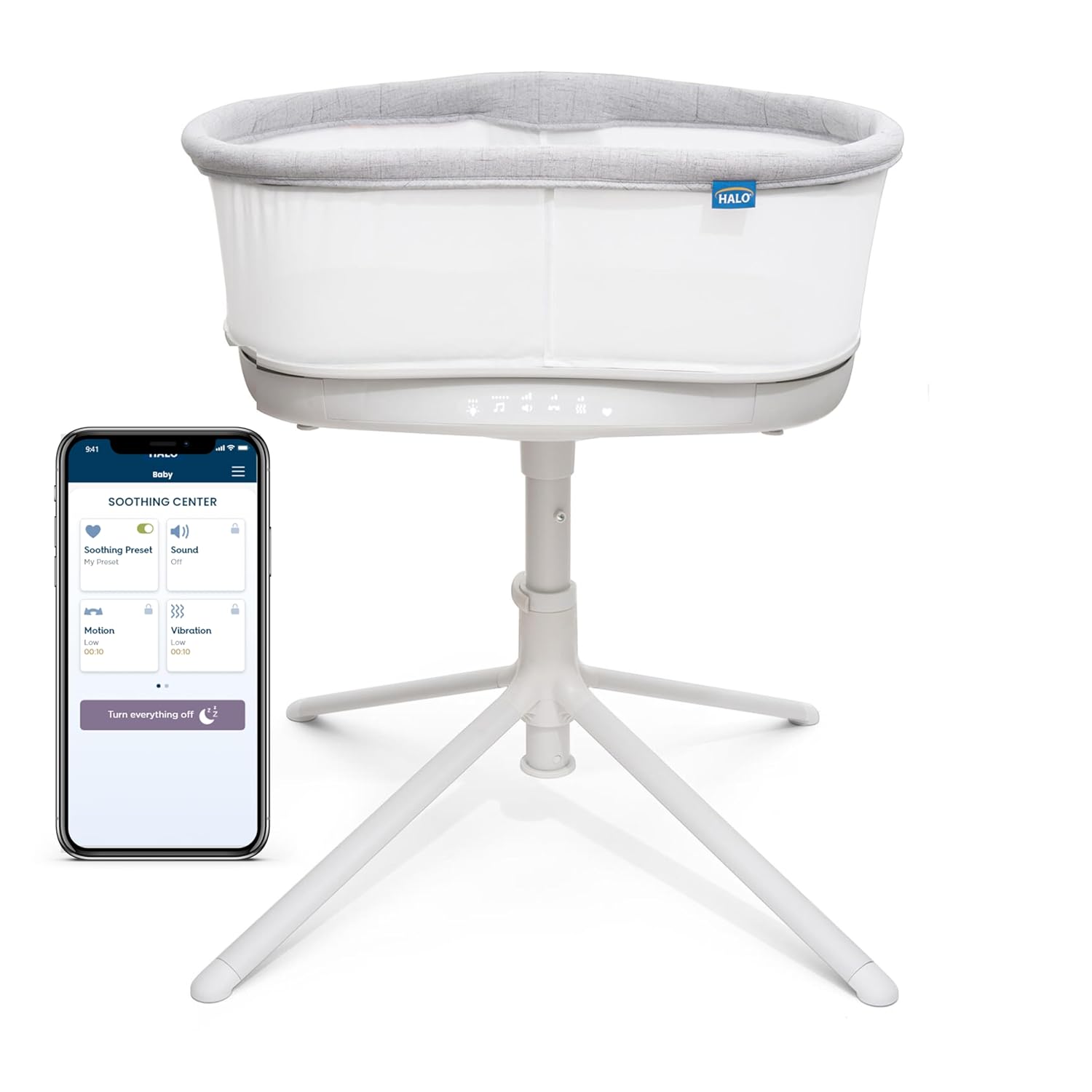
- SMART SOOTHING WITH AUTOSOOTHE TECHNOLOGY: Automatically detects your baby’s cries and responds with customizable rocking, vibration, and soothing sounds to help them fall back asleep, hands-free.
- FULLY CUSTOMIZABLE OR EXPERT-GUIDED MODES: Choose from hundreds of soothing combinations or select expert-designed programs tailored for newborn sleep, colic relief, and weaning stages.
- 360° SWIVEL FOR NIGHTTIME CONVENIENCE: Easily bring your baby close with the full rotating base, perfect for nighttime feedings and bonding without leaving your bed.
- EASY LOWERING WALL FOR RECOVERY-FRIENDLY CARE: Patented lowering side wall allows you to gently reach your baby from bed, ideal for C-section recovery and postpartum rest.
3 to 4 Months: The Turning Point
Around 3 to 4 months, your baby’s brain reorganizes its sleep architecture. Two sleep stages become four. Sleep cycles mature to resemble adult patterns.
Your baby now cycles through light and deep sleep stages every 45 to 60 minutes at night. Between each cycle, they surface briefly. If they fell asleep being rocked, fed, or held, they wake up, realize the conditions changed, and cry.
A newborn who was sleeping 4 hour stretches may suddenly start waking every 45 minutes. Not a step backward. A step forward, biologically speaking. Their brain grew up. Their sleep skills didn’t.
What changes at 3 to 4 months:
- Sleep patterns permanently shift
- Night wakings increase (not decrease)
- Naps get shorter
- REM sleep reorganizes into adult-like positioning within the cycle
- Your old baby sleep tricks stop working
What to do:
- Update wake windows (stretch to 90 to 120 minutes)
- Move bedtime earlier (6:30 to 7:30 PM)
- Start a consistent bedtime routine (15 to 20 minutes)
- Begin thinking about how your baby falls asleep at bedtime
4 to 6 Months: The Window Opens
For many families, 4 to 6 months is the golden window for teaching consolidated night sleep. Your baby is developmentally ready. Their circadian rhythm is established. Sleep cycles are mature. And most babies at the older end of the range are physically capable of longer stretches without feeding.
A 5 to 6 month old baby sleeps best on 3 naps per day, an early bedtime, and wake windows of 1.75 to 2.5 hours. Most healthy infants at the older end of the range are capable of one long overnight stretch of 6 to 8 hours, plus 1 to 2 night feeds.
Realistic night sleep at 4 to 6 months:
- Longest stretch: 4 to 8 hours
- Night feedings: 1 to 3
- Bedtime: 6:30 to 7:30 PM
- Total night sleep: 10 to 12 hours (including wake-ups for feeds)
6 to 9 Months: Stretching Toward A Full Night
By 6 months, many babies are biologically capable of sleeping 10 to 12 hours overnight, needing 0 to 1 night feeds. The ones who aren’t doing it yet are usually held back by one of two things: the schedule is off, or they haven’t learned to fall asleep independently.

Nap transitions happen here, moving from 3 naps down to 2. Awake time stretches to 2.5 to 3.5 hours between sleeps.
Night feeds at the older end of the range are frequently habitual rather than nutritional. A baby who nurses for 2 minutes and passes back out isn’t hungry. They’re using feeding as a bridge back to sleep.
9 to 12 Months: The Home Stretch
A 9 to 12 month old baby on a well-tuned schedule is capable of sleeping 10 to 12 hours overnight without eating. Many babies are doing exactly that by 9 months. The ones who aren’t are almost always dealing with a schedule issue, a sleep association, or a sleep regression.
The 8 to 10 month developmental surge disrupts sleep for 2 to 4 weeks. Separation anxiety peaks. Motor skills explode. Standing in the crib at midnight becomes a nightly adventure.
But the underlying capability is there. Your old baby sleep struggles are not permanent. They’re solvable.
The 7 Sleep Strategies That Actually Get Your Baby Sleeping Through The Night
Everything above is context. Here’s the action plan. These are the baby sleep strategies that work, ranked in order of impact.
Strategy 1: Fix The Schedule First
Every time. No exceptions.
The schedule is the foundation everything else sits on. The best sleep training method in existence produces zero results on the wrong schedule.
What “right schedule” means:
- Age-appropriate wake windows (building throughout the day, shortest in the morning, longest at bedtime)
- The right number of naps for your baby’s age
- Total daytime naps capped at the appropriate amount (too much daytime sleep steals from night sleep)
- Bedtime landing between 6:30 and 7:30 PM for most babies over 4 months
Quick reference for nap counts by age:
| Age | Naps |
|---|---|
| 0 to 3 months | 4 to 6 |
| 4 to 5 months | 3 to 4 |
| 6 to 8 months | 2 to 3 |
| 9 to 12 months | 2 |
| 13 to 17 months | 1 to 2 (nap transition zone) |
| 18 months to 3 years | 1 |
Each nap transition reshapes the entire day. Awake time lengthens. Bedtime shifts. The schedule you used 6 weeks ago is almost certainly outdated.
If your baby grows and the schedule doesn’t grow along, sleep fractures.
Strategy 2: Teach Your Baby To Fall Asleep Independently
Here it is. The big one. The strategy that transforms everything.
If your baby falls asleep being rocked, fed, bounced, held, or in a baby sling, they need those same conditions recreated at every sleep cycle transition overnight. That’s every 45 to 90 minutes. All night. Every night.
It’s exhausting for the sleeping parent. It’s unsustainable long term.
The goal is for your baby to go into bed awake, calm, and capable of bridging the gap from awake to asleep on their own. A baby who does it at bedtime does it between cycles at 1 AM and 4 AM too. The night wakings don’t disappear. The crying does. Your baby wakes, resettles, and sleeps on.
How to get there depends on your comfort level:
The gradual path: Reduce intervention slowly over days and weeks. Rock a little less each night. Put your baby down a little drowsier each night. Stay nearby and offer comfort through presence and voice, then gradually reduce your presence.
The direct path: Formal sleep training using a structured method. Timed checks, chair method, pick up put down, or full extinction. Most babies show dramatic improvement within 3 to 5 nights of consistency.
The middle ground: Start by putting your baby in bed awake at bedtime only. Don’t change anything at nap time or during night wakings yet. Let bedtime be the training ground. Once bedtime clicks, night wakings decrease naturally.
No single method is universally “right.” Consistency in whatever approach you choose matters more than the method itself. Switching approaches every second night resets the clock and confuses your baby.
Strategy 3: Build A Soothing Bedtime Routine

A calming bedtime routine is one of the most underrated tools in the entire baby sleep toolkit. It signals to your baby’s brain that sleep approaches. Over time, the routine itself triggers drowsiness.
A good bedtime routine is:
- 15 to 20 minutes long (not longer)
- Identical every night, same steps, same order
- Calm, dim, and boring
- Done in the room where your baby sleeps
Sample routine:
- Nappy change and night clothes
- Sleep sack or sleep bundle
- Feed (keep your baby awake during it)
- One short book or a lullaby
- White noise on, lights off
- A goodnight kiss and a quiet phrase
- Into bed awake
Follow a calming bedtime routine every single night and it becomes your baby’s most reliable sleep cue. More reliable than rocking. More reliable than feeding. The consistency itself is the magic.
The feed placement matters. If the last step is feeding, your baby falls asleep eating, and feeding becomes the sleep association. Move the feed earlier in the routine. Book or lullaby after the feed creates a buffer between eating and sleeping.
Strategy 4: Optimize The Sleep Environment
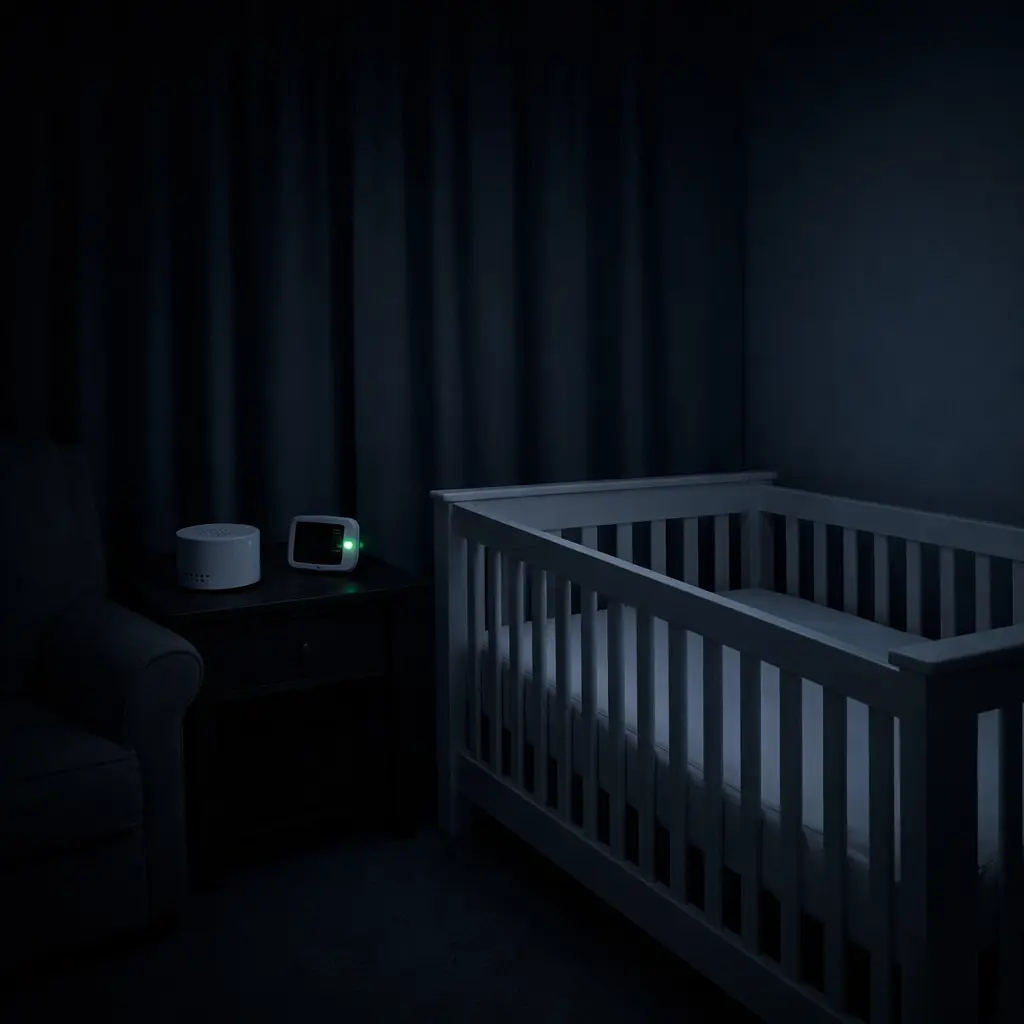
Boring rooms produce great sleepers. Stimulating rooms produce night wakings.
The non-negotiables:
Darkness. Real darkness. Not “kind of dim.” The kind of dark where you trip over the laundry basket. Light suppresses melatonin and signals daytime to your baby’s brain. Night lights are fine for hallways, not for sleep spaces. Invest in blackout solutions and seal the edges. Morning light creeping in at 5 AM is the number one driver of early morning wakings.
White noise. Continuous, all night, every night. Not a lullaby that plays for 20 minutes and stops. Not ocean waves that vary in volume. Steady, consistent white noise. It masks environmental disruptions and creates an auditory sleep cue.
Temperature. 68 to 72 degrees Fahrenheit. Babies sleep poorly in warm rooms. A cool room in a sleep sack is the ideal combination.
A firm mattress, flat surface, nothing else in the crib. The Lullaby Trust and the American Academy of Pediatrics are clear on safe sleep guidance. A firm mattress, a fitted sheet, your baby on their back. No loose blankets, pillows, bumpers, or stuffed animals for infants under 12 months. Safe sleep reduces the risk of sudden infant death syndrome (SIDS), and a safe environment supports longer, less disrupted sleep.
I mention sudden infant death as a serious and well-researched topic. Every parent deserves to know the facts, and the Lullaby Trust is an excellent resource for safe sleep education.
Strategy 5: Get The Feeding Schedule Right
Hunger is a real and valid reason for night wakings. You don’t fix hunger by sleep training through it. You fix it by making sure your baby eats enough during the day.
Breastfeeding and night sleep:
Breastfed babies digest milk faster and frequently need night feeds for longer than formula-fed babies. A good breastfeeding routine during the day, full feeds every 2.5 to 3 hours during waking hours, helps front-load calories and reduces overnight hunger.
Solid foods (6 months and beyond):
Once solids are introduced, a protein and fat-rich dinner 1 to 1.5 hours at bedtime supports longer stretches of sleep overnight. Avocado, egg yolk, full-fat yogurt, nut butters, and soft cooked meats all digest slowly and sustain your baby through the night.
Middle-of-the-night feedings: hunger versus habit

- ANTI-COLIC BABY BOTTLE. Anti-Colic internal vent system is clinically proven to reduce colic. Decreases spit-up, burping and gas.
- CONSISTENT FLOW RATE. Vacuum-free feeding is closest to breastfeeding and Dr. Brown’s silicone nipples provide a consistent flow so babies can feed at their own pace.
- PRESERVES NUTRIENTS. The anti-colic vent system is proven to help preserve bottle milk nutrients and aids in digestion for a better night’s sleep.
- BREASTFEEDING BOTTLE. The breast-like nipple shape encourages a proper latch for a more natural bottle feeding experience and eases the transition from breast to bottle and back again.
Knowing the difference is everything.
Hunger signs: Vigorous feeding for 10 or more minutes (nursing) or 3 or more ounces (bottle). Baby falls back asleep easily afterward. Feeding is purposeful and substantial.
Habit signs: Eats for 2 to 3 minutes and passes out. Barely consumes anything. Wakes at the exact same time every night regardless of daytime intake. Uses sucking as a vehicle to fall back asleep.
If night feedings are habitual, night weaning is appropriate. Gradually reduce the amount per feed over 5 to 7 nights (decrease by 1 ounce per night for bottles, decrease nursing time by 1 to 2 minutes per night). Talk to your pediatrician first. A newborn needs those calories. A healthy 9 month old eating three solid meals a day? Probably not.
Strategy 6: Handle Night Wakings Strategically
Every Baby is Different
Generic advice doesn’t work. Get a sleep schedule personalized for YOUR baby’s age, habits, and temperament.
Get My Baby’s Plan – $2.99✓ 60 seconds • AI-customized • Instant download
Not every sound at 2 AM requires a response.
Babies are noisy sleepers. They grunt, squirm, whimper, and make sounds between sleep cycles that don’t mean “come get me.” Many of these sounds happen during transitions between cycles or during periods of lighter sleep.
The pause:
A brief pause of 3 to 5 minutes at night wakings gives your baby space to resettle. Not every fuss is a call for help. Sometimes drowsy babies just need a moment to drift back on their own.
If the fuss escalates into real crying, respond. But the pause is where self-settling begins.
A protocol for nighttime caregiving during overnight waking:
- Pause 3 to 5 minutes
- If crying escalates, go in
- Keep the room dark, keep your voice low and calm
- Offer minimal intervention (a hand on the chest, quiet shushing)
- If genuinely hungry, feed calmly and quietly
- Return your baby to bed awake
- Leave
Brief. Boring. Consistent. Night waking responses that are stimulating or drawn-out teach your baby that waking up at night is rewarding.
Strategy 7: Respect Sleep Regressions Without Surrendering To Them
Sleep regressions hit at predictable developmental windows: 4 months, 6 months, 8 to 10 months, 12 months, 18 months, and 2 years. Each regression coincides with a major developmental leap.
The 4 month sleep regression is the only true regression involving a permanent change to sleep stages. Every other regression is temporary and usually resolves within 2 to 4 weeks.
The critical rule during sleep regressions:
Don’t introduce new habits you don’t want to maintain. If you start rocking to sleep during the 8 month regression, you’ll still be rocking to sleep at 10 months. If you bring your baby into your bed during the 12 month regression, you’ll have a co-sleeping toddler at 18 months.
Hold your schedule steady. Offer comfort. Use an earlier bedtime to compensate for disturbed nights. And wait. The regression passes. The habits you create during it don’t.
Age-By-Age Guide: How To Get Baby To Sleep Through The Night At Every Stage
Birth to 12 Weeks: Laying The Foundation
Your sleep goals at the newborn stage are modest and realistic:
- Distinguish day from night (light during the day, dark at night)
- Start a simple bedtime routine by 4 to 6 weeks
- Keep nighttime interactions dim, quiet, and boring
- Practice the occasional “drowsy but awake” attempt at bedtime (no pressure)
- Make sure babies sleep on their backs on a firm mattress to reduce infant death risk
You’re not fixing night sleep right now. You’re planting seeds. Newborns wake to eat. A newborn needs you at every waking. Respond fully and without guilt.

- Classic Muslin
- Machine Washable
- Multi-use baby essential
Many babies naturally begin offering a longer stretch of 3 to 5 hours around 6 to 8 weeks. Make sure babies get that longest stretch at night, not during a daytime nap. If your newborn sleeps 5 hours at nap time, it comes out of the night. Cap daytime naps at 2 to 2.5 hours to protect nighttime sleep.
3 to 4 Months: The Recalibration
Baby sleep strategies for 3 to 4 months:
- Stretch wake windows to 90 to 120 minutes
- Move bedtime to 6:30 to 7:30 PM
- Establish a regular sleep schedule for the day (3 to 4 naps)
- Begin working on independent sleep skills at bedtime
- Your baby wakes between cycles now, understanding why sleep disruptions happen prevents panic
At the older end, your baby sleeps in mature cycles for the first time. A good sleep pattern emerges from consistent timing and a consistent bedtime routine. Not from crossing your fingers and hoping.
5 to 6 Months: The Opportunity
Baby sleep strategies for 5 to 6 months:
- 3 naps per day, moving toward 2 at the older end
- Awake time of 1.75 to 2.5 hours between sleeps
- Bedtime between 6:30 and 7:00 PM
- Night feeds: 1 to 2 (check with your pediatrician about nutritional need)
- If your baby falls asleep independently at bedtime, many night wakings resolve on their own
- If not, 5 to 6 months is an excellent time to work on it
Many families discover that a baby who learns to fall asleep independently at bedtime drops from 4 to 5 night wakings down to 0 to 1 within a single week. The change is dramatic.
Sleep helps everyone in the house. Not just the baby. A sleeping parent is a healthier, more patient, more present parent. Your needs matter too.
7 to 9 Months: Nap Transition And Nighttime Progress
Baby sleep strategies for 7 to 9 months:
- Nap transition from 3 naps to 2 (usually between 6 and 8 months)
- Awake time of 2.5 to 3.5 hours
- Cap the morning nap to protect the afternoon nap
- Night feeds: 0 to 1 for most healthy infants at the older end
- The 8 to 10 month developmental regression hits here, hold steady and don’t change the routine
Babies at the older end of the range are fully capable of a full night of consolidated sleep. The ones not doing it yet are almost always dealing with a schedule problem, a sleep association, or both.
10 to 12 Months: Fine Tuning
Baby sleep strategies for 10 to 12 months:
- 2 naps, awake time of 3 to 4 hours
- Night feeds: 0 (most healthy babies at the older end need none)
- The 12 month nap strike is NOT a sign to drop to 1 nap
- Hold 2 naps until 13 to 18 months
- Keep bedtime steady at 7:00 to 7:30 PM
- A child at the older end of the range is a confident sleeper if the foundation was built
Toddler Years: 12 Months And Beyond
Baby sleep strategies for toddlers:
- The 2 to 1 nap transition happens between 13 and 18 months
- A single midday nap of 1.5 to 2.5 hours anchors the toddler day
- Awake time stretches to 4.5 to 5.5 hours
- Bedtime lands at 7:00 to 7:30 PM
- Toddler play ideas during awake time keep your child active and tired enough for restorative naps
- The 18 month regression brings fresh sleep regressions, boundary testing, and separation anxiety
- Stay consistent, toddlers thrive on predictability
Troubleshooting: Your Baby Still Isn’t Sleeping Through The Night

You’ve done the work. Schedule is right. Routine is locked in. Environment is dialed. And your baby still wakes up at night.
Here are the most common culprits, ranked:
Night Wakings From Sleep Associations
The number one reason healthy babies over 6 months old continue to wake multiple times per night. Your baby learns to fall asleep at bedtime under specific conditions and needs those conditions recreated at every cycle transition.
The fix: Teach independent sleep. Put your baby in bed awake. Let them bridge the gap on their own. Sleep training is one path. Gradual methods are another. Both work.
Early Morning Wakings
Up for the day at 5 AM? Three likely causes:
- Too much daytime sleep. Naps are too long or there are too many of them. Total sleep exceeds your baby’s biological need.
- Bedtime is too early. A baby asleep at 6:00 PM who wakes at 5:00 AM got 11 hours. They might simply be done.
- The first wake window reinforces the early pattern. A baby who naps at 7:00 AM locks the 5 AM wake-up into their body clock. Base the first nap on your target wake time, not the actual one.
Split Nights
Your baby wakes at 1 or 2 AM and stays awake for 45 minutes to 2 hours. Not upset. Just… awake.
Split nights trace back to too much total sleep. Your baby’s biological sleep need is being exceeded and the body sheds the excess by splitting the night in half.
The fix: reduce total sleep. Cap naps. Push bedtime slightly later. Results appear within 3 to 5 nights.
False Start Bedtimes
Your baby falls asleep at bedtime and wakes 30 to 45 minutes later, right at the end of the first sleep cycle.
Two common causes: the last awake time stretched too short (not enough sleep pressure), or your baby fell asleep under conditions that changed (rocked to sleep, transferred to bed).
Extend the last wake window by 15 minutes. Make sure your baby goes into bed awake. False starts usually disappear within days.
Disturbed Nights From Developmental Leaps
Crawling, standing, walking, language explosions. Every major developmental milestone creates sleep disruptions for 1 to 4 weeks.
The fix isn’t a schedule change. It’s patience. Practice new skills obsessively during awake time. Offer comfort at night without creating new habits. Use an earlier bedtime on rough nap days.
The Enough Sleep Question: How Much Night Sleep Does Your Baby Actually Need?
Here’s a reference for total sleep in 24 hours:
| Age | Total Sleep (hours) |
|---|---|
| Newborns (0 to 3 months) | 14 to 17 |
| Infants (4 to 6 months) | 12 to 16 |
| Infants (7 to 12 months) | 12 to 15 |
| Toddlers (1 to 2 years) | 11 to 14 |
Your specific baby may land at the high or low end of the range. A baby who needs 13 total hours and is getting 15 hours of sleep opportunity is going to have disturbed nights. A baby who needs 15 hours and is only getting 12.5 is going to be chronically overtired.
Matching sleep opportunity to actual sleep need is one of the most overlooked pieces of the puzzle. Too much is just as problematic as too little.
Safe Sleep: A Quick But Critical Section
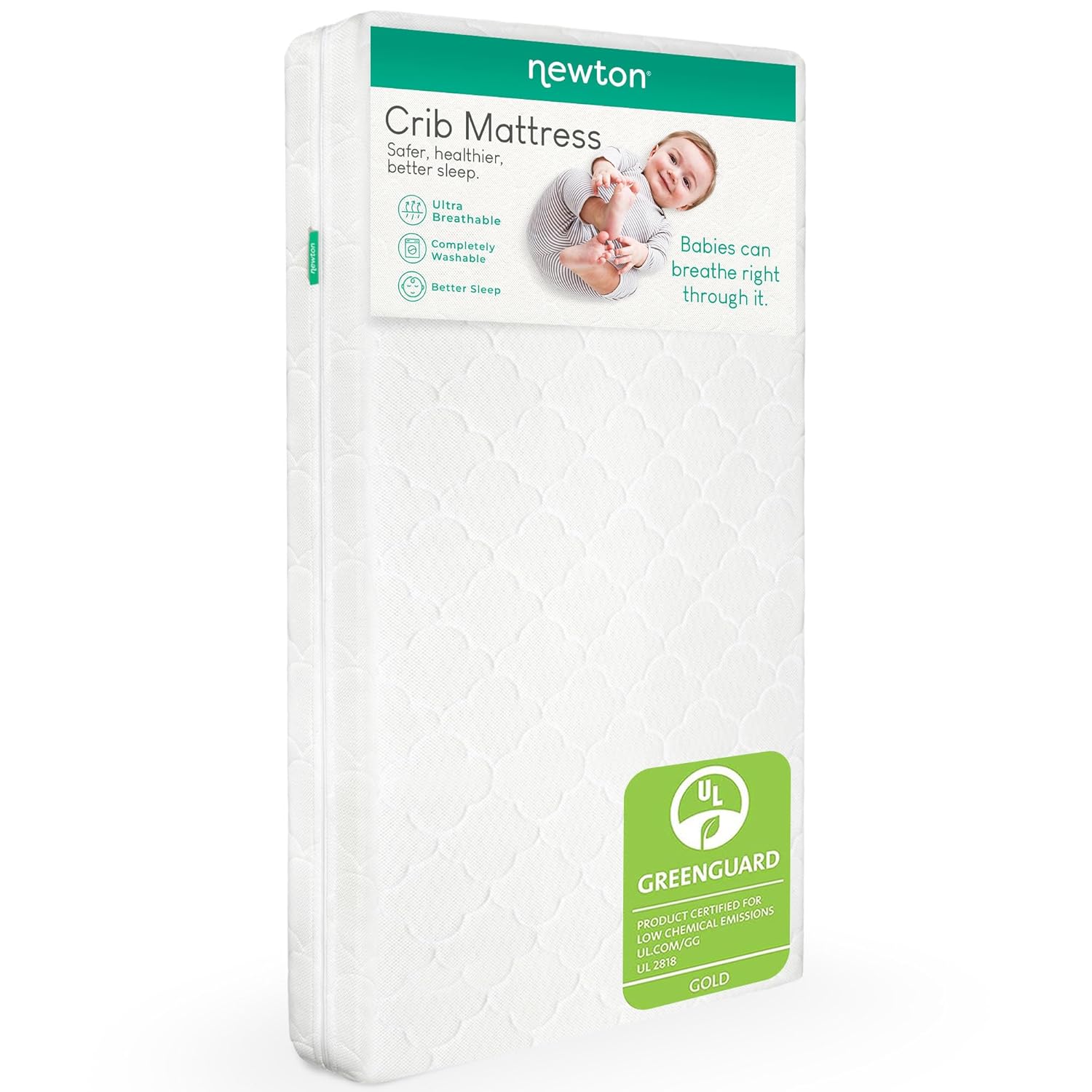
- GREENGUARD GOLD CERTIFIED: Our mattress is independently tested and certified for low emissions, exceeding the highest industry safety standards to help improve indoor air quality. Your baby will breathe easy, and you can too.
- INFANT & TODDLER (2-STAGE): One to grow on! Our 2-stage mattress provides your little one with the comfort and firm support they need.
Every conversation about baby sleep deserves a mention of safety.
Sudden infant death syndrome (SIDS) remains a concern for infants, and safe sleep practices reduce risk significantly.
The basics according to the Lullaby Trust and leading pediatric organizations:
- Back to sleep, every sleep, every time
- Firm, flat mattress in a safety-approved crib
- No loose bedding, pillows, bumpers, or soft toys for infants
- Room sharing (not bed sharing) for the first 6 to 12 months
- No overheating, dress your baby in appropriate night clothes for the room temperature
- A sleep sack replaces loose blankets safely
Safe sleep and good sleep are not in conflict. They reinforce each other.
The Personalization Factor: Your Specific Baby
Here’s the honest truth. Everything above applies broadly to babies and toddlers as a group. But your child is not a group. Your child is one very specific human being.
A baby who needs long awake time stretches at 7 months looks different from one who needs shorter ones. A good sleeper at 5 months may need a completely different schedule than an average sleeper. Sleep patterns vary from baby to baby, week to week, month to month.
Generic charts and guidelines get you 80 percent of the way. The remaining 20 percent, the part that turns “okay sleep” into “great sleep,” comes from personalization.
If you want a schedule built around your specific baby’s age, temperament, and current sleep patterns, there’s a free personalized AI quiz linked in the Space description at the top of the page. Answer a few quick questions and receive a custom overnight sleep schedule, nap timing, and wake windows tailored to your child.
No guessing. No cross-referencing five different articles at 3 AM. Just a plan built for your baby.
Your Baby Is Closer To Sleeping Through The Night Than You Think
Ready for Better Sleep Tonight?
Stop guessing. Get your baby’s personalized sleep schedule based on their exact age, current habits, and your family’s routine. Science-backed and customized in 60 seconds.
Start Free Assessment →Here’s the thing I want to leave you carrying.
A full night of sleep is not a fantasy. It’s not reserved for “easy” babies or families who got lucky. It’s a reachable, realistic destination for nearly every healthy baby and every exhausted family.
The path runs through a solid schedule, a soothing bedtime routine, a dark and boring room, age-appropriate feeding, and a baby who learns to fall asleep independently. Those five elements, lined up together, produce a good sleeper. Not overnight. But faster than most parents expect.
Sleep helps your baby grow, develop, and thrive. Sleep helps you become the parent you want to be. Healthy sleep habits built now carry your child through the toddler years and beyond.
Start tonight. Pick one strategy from the list above and implement it consistently for one week. Just one.
You and your baby are closer to a good sleep pattern than you realize. The answer isn’t a secret. It never was. It’s just a matter of doing the next right thing, one night at a time.
Tell Me About Your Nights 👇
I want to hear from you:
- How old is your baby?
- How many times are they waking at night?
- How do they fall asleep at bedtime?
- What’s the one change you’re most ready to make?
Drop those details in a comment. Let’s turn those disturbed nights into peaceful ones.
There is no sweeter sound in a quiet house than the silence of a baby sleeping deeply, dreaming soft dreams, growing in peace. And there is no greater gift you give yourself as a parent than the rest you’ve earned. Tonight is a new night. Make it count.